If your Wolf range burner keeps clicking and sparking long after the burner has lit, or clicks continuously even when no burner is turned on, you are dealing with one of the most common Wolf specific service issues. The clicking is not just annoying, it also wastes electricity and often signals a component that needs attention before it fails completely. Fortunately, most causes are addressable, and about half of Wolf clicking issues can be resolved with basic cleaning and drying without a service call.
This guide walks through exactly why Wolf range burners keep sparking after ignition, the safe DIY steps to try before calling for professional service, warning signs that mean you need certified Wolf technician attention today, and cost expectations if the issue does need professional repair.
Why Wolf Range Igniters Are Different
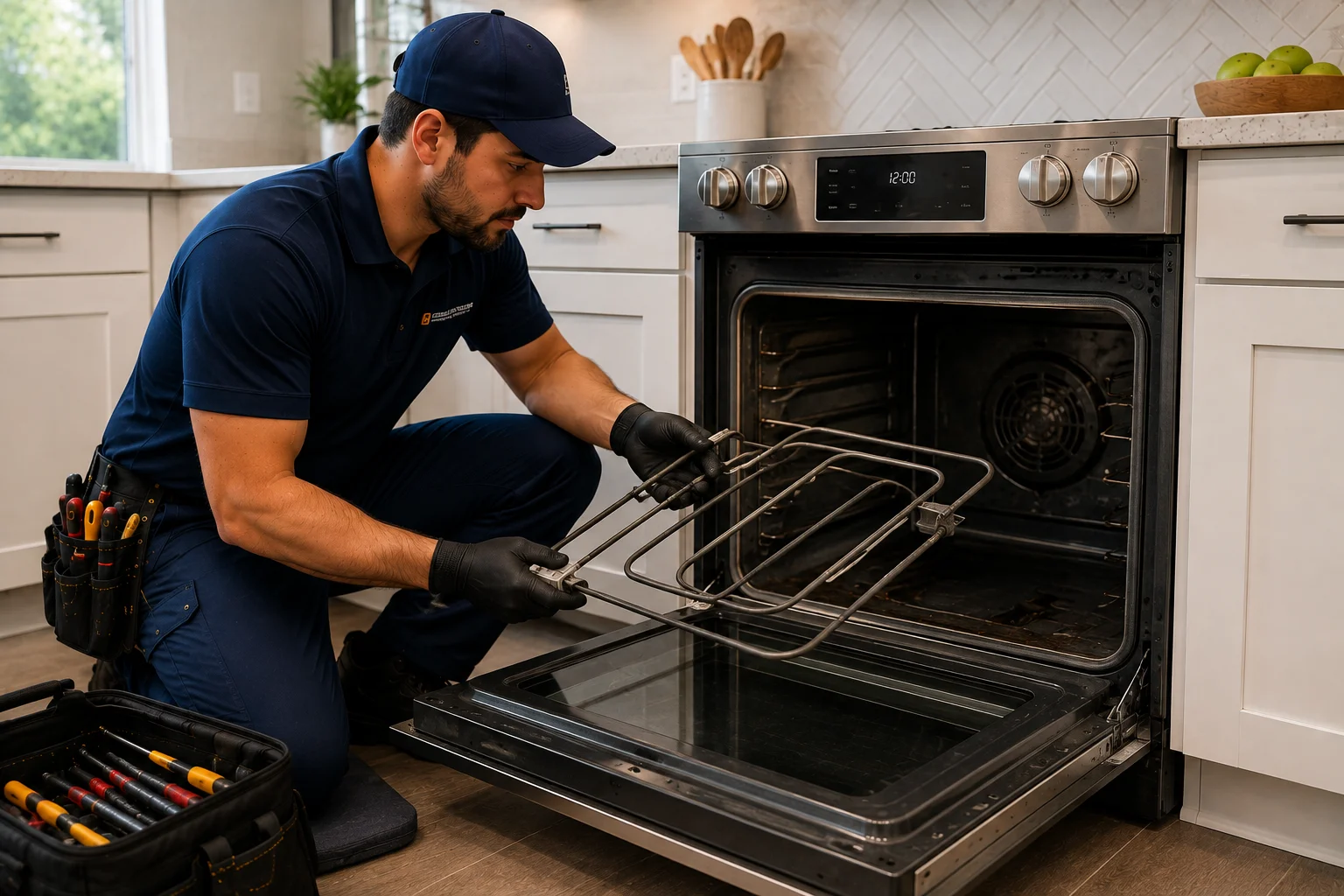
Wolf ranges use high performance sealed burner systems engineered for precise flame control. Each burner has its own dedicated igniter that clicks when the burner knob is turned to light position. Once the burner detects flame, the igniter should stop automatically.
The clicking you hear is high voltage electricity jumping across the igniter electrode gap, producing the spark that ignites the gas. When this continues after flame is established or occurs when no burner is called, something is preventing the flame sensor from telling the igniter to stop.
Common causes on Wolf specifically include moisture in the burner cap area, food debris around the electrode, misaligned burner cap, damaged igniter switch, or a failed spark module. Wolf ranges are more sensitive to these issues than economy brands because the ignition system is more precisely calibrated.
If you have a Wolf range in Clive and the clicking persists after simple cleaning, professional service from a certified Wolf technician is important. Wolf parts and diagnostics are specialized. Our team handles Wolf service with factory certified technicians. Full coverage available through our oven repair Des Moines service for Wolf and other premium brand ranges.
Six Common Causes Ranked by Frequency
1. Moisture in the burner area. Number one cause. Cleaning the stovetop with wet cloths, spills from cooking, or humidity from nearby dishwasher use leaves moisture between the igniter electrode and the burner cap. Moisture disrupts the spark and prevents the flame sensor from working correctly.
2. Food debris on the electrode. Boiled over pot contents, oil splatter, or crumbs stuck around the small ceramic electrode block spark formation. The igniter keeps trying to spark because the flame sensor cannot detect a stable flame.
3. Misaligned or improperly seated burner cap. If the burner cap is not sitting flat and level over the burner base, gas flow and flame pattern are disrupted. The flame sensor cannot verify ignition and keeps calling for spark.
4. Damaged or worn igniter switch. The switch behind the control knob can get stuck in the light position, causing continuous ignition calls even when the burner is off. Common on Wolf ranges 5 to 10 years old with heavy use.
5. Failed spark module (ignition module). The electronic module that generates the high voltage for the spark can fail in a state that produces continuous clicking regardless of switch position. Requires replacement.
6. Damaged burner cap or grate. A cracked burner cap, worn grate, or damaged burner base changes how flame forms and reaches the sensor. Less common but possible on older units or after physical impact damage.
DIY Safety First
Before doing anything with a Wolf range that is sparking continuously, follow these safety steps:
Turn off all burner controls. Verify no burners are in the on or light position.
If you smell gas, do NOT try to diagnose or repair. Turn off the gas supply at the shutoff valve behind or under the range. Ventilate the area. Call for professional service and gas company if smell is strong.
If clicking continues with all knobs off, turn off power to the range at the circuit breaker. This stops the electrical spark. Then you can safely inspect components.
Never attempt to disassemble internal components on a Wolf range unless you are trained in gas appliance service. Wolf ranges have precision gas manifold systems that require professional handling.
Safe DIY Steps to Try
These steps address the most common causes without requiring internal disassembly.
Step 1: Wait for the burner area to fully dry. If you just cleaned the stovetop with wet cloths or had a boil over, moisture is the most likely cause. Turn off power to the range. Let everything air dry for 30 to 60 minutes. Restore power. Test the burners. About half of clicking issues resolve at this step.
Step 2: Remove and clean the burner cap and grate. Lift off the affected burner cap. Look at the small ceramic igniter electrode (usually a small pointed piece next to the burner). If you see food debris, grease, or grime, clean it carefully with a dry soft brush or dry cotton swab. Never use liquid cleaner directly on the electrode.
Step 3: Inspect the burner cap for damage. Look for cracks, chips, or warping. A damaged cap needs replacement. Wolf original replacement caps are available through certified service.
Step 4: Reseat the burner cap correctly. Place the burner cap back on the burner base. Make sure it sits flat and level. Rotate slightly to verify it seats properly in any alignment marks or notches.
Step 5: Clean the burner base ports. Around the base of the burner (where gas comes out), small ports may be clogged with food debris. Use a straight pin or toothpick to gently clear ports. Never use metal wire that could damage the ports.
Step 6: Test one burner at a time. Restore power. Turn on one burner. It should click briefly, ignite, then stop clicking. If clicking continues after ignition, or if the burner does not light and clicking persists, the issue is beyond simple cleaning and needs professional service.
Step 7: Reset the range electronics. If some burners work correctly and others do not, or clicking is intermittent, try a full electronics reset. Turn off power at the breaker for 5 minutes. Restore power. This clears some latched electronic states on Wolf ignition systems.
Warning Signs That Mean Book Service Today
Any of these means the issue is beyond DIY and needs certified Wolf service:
Clicking continues even with all burner knobs off and power on to the range.
You smell gas even when no burner is lit.
Flames on one or more burners are yellow or orange instead of blue.
Sparking is visible from an area other than the burner electrode itself.
Any burner lights but then flame goes out repeatedly during cooking.
You hear the clicking but see no spark at the electrode.
The range display shows an error code related to ignition.
Any burnt smell coming from the control panel area or behind the range.
Two or more of these together means shut off the range power at the breaker, shut off the gas supply valve, and book emergency service same day.
Clive Specific Considerations
Clive homeowners commonly own Wolf ranges due to the concentration of higher end homes and kitchen remodels in the area. This creates specific service considerations worth understanding.
Wolf service in Clive is available same day from certified providers when called before noon. Response times average 60 to 90 minutes from call to arrival for local providers.
Wolf parts are stocked by certified local providers for common repairs including igniter switches, spark modules, and burner caps. Non certified operators often have to order Wolf parts, adding 3 to 5 days to repair timelines.
Wolf warranty coverage may still apply if your range is under 3 years old. Check your original documentation before paying for repair. Sub-Zero Wolf offers 2 year full coverage on most models and additional coverage on certain components.
If you need appliance repair Clive service specifically for a Wolf range issue, our team dispatches from within the metro with Wolf certified technicians and common Wolf parts on the truck.
Cost Expectations for Wolf Range Repair
Wolf repairs cost more than standard brand repairs due to specialized parts and certified technician training. Typical ranges:
Burner cap replacement: 150 to 280 dollars total.
Igniter electrode replacement: 220 to 380 dollars.
Igniter switch replacement: 250 to 400 dollars per burner.
Spark module replacement: 350 to 550 dollars.
Gas valve or safety valve replacement: 400 to 700 dollars.
Full ignition system diagnosis and repair: 400 to 700 dollars.
Wolf ranges cost 8000 to 15000 dollars new, so even significant repair costs are often justified compared to replacement. Wolf units are engineered for 20 to 30 years of service.
Why Certified Service Matters for Wolf
Wolf ranges are precision engineered with specific torque specifications, alignment requirements, and diagnostic protocols. Non certified technicians can complete simple repairs but often miss subtle issues that certified techs catch immediately.
Warranty implications are also significant. If your Wolf range is still under warranty and non authorized service is performed, the warranty may be voided. Even after warranty, using certified service preserves the value and reliability of your investment.
Certified Wolf technicians also carry brand specific tools including calibration equipment and diagnostic modules that non certified operators do not have.
Our full appliance repair Des Moines team includes Sub-Zero Wolf certified technicians for all premium brand cooking appliance service. Same day availability across the metro.
When to Consider Replacement vs Repair
For Wolf ranges, repair almost always wins over replacement due to the price gap between repair and replacement.
Wolf range under 15 years old: repair almost any issue up to 1500 dollars.
Wolf range 15 to 25 years old: repair up to 1000 dollars for single issue.
Wolf range over 25 years old with multiple issues: Consider replacement or full rebuild.
Any Wolf range with catastrophic failure (control board dead, multiple gas valves failed): Weigh repair quote against replacement cost carefully.
Because Wolf ranges retain value and can be sold to buyers seeking premium used appliances, repair often makes financial sense even at higher cost points.
Preventing Continuous Ignition Issues
These practices dramatically reduce igniter clicking problems on Wolf ranges.
Never clean the stovetop with excessive water. Damp cloths only, and dry thoroughly before turning on burners.
Wipe up spills immediately, before food dries onto the electrode area.
Remove and clean burner caps monthly. A clean cap seats properly and prevents alignment issues.
Never use metal utensils to scrape the burner cap or grate. These can damage the coating and lead to alignment problems.
Have annual professional inspection on Wolf ranges. A certified technician can catch developing issues before they cause functional problems.
Use pans appropriate to burner size. Oversized pans reflect heat back onto ignition components and cause premature wear.
Frequently Asked Questions
Is continuous clicking a fire hazard?
Not directly, but it can indicate a gas valve issue that could become dangerous. Turn off the range at the breaker and book service if clicking persists after cleaning.
Can I just tape down the ignition switch to stop the clicking?
Absolutely not. This bypasses safety systems. The clicking is telling you something needs attention.
How long do Wolf igniter systems typically last?
Individual igniter switches typically last 10 to 15 years with normal use. Spark modules last 15 to 25 years. Well maintained Wolf ranges routinely hit 25 to 30 years of total service life.
Can any appliance tech work on my Wolf range?
Simple cleaning and burner cap replacement can be done by any competent tech. Anything involving the gas manifold, spark module, or internal electronics should be handled by Sub-Zero Wolf certified technicians.
Should I get quotes from multiple companies?
For Wolf repairs over 500 dollars, yes. Wolf certified providers have different labor rates and parts markup structures.
Book Certified Wolf Service Today
Wolf ranges are premium investment appliances that deserve premium service. If DIY cleaning steps did not resolve your continuous clicking issue, book certified service today rather than waiting. Ignition issues can worsen and lead to gas valve problems that are much more expensive to repair. If you are searching for appliance repair near me in the Clive area that specifically handles Wolf and Sub-Zero brands with certified technicians and OEM parts, call (319) 410-0530 to book. Our team dispatches same day for premium brand cooking appliance emergencies.
A properly functioning Wolf range delivers 20 to 30 years of premium cooking performance. Prompt certified service protects that investment.
Sources: Sub-Zero Wolf official service and support resources, Consumer Product Safety Commission kitchen appliance safety guidance, and the ENERGY STAR cooking appliance efficiency and maintenance guidance.