When your laundry stays damp after a full cycle or your machine refuses to start, knowing whether your electric dryer thermal fuse is blown can save you hours of guesswork. Homeowners searching for appliance repair near me across Polk County often face sudden heating failures caused by restricted airflow and lint buildup. Before you call for emergency appliance repair, you can safely test this small safety component at home with a basic multimeter.
What Happens When an Electric Dryer Thermal Fuse is Blown?
A thermal fuse is a single-use safety device designed to protect your home from dryer fires. Mounted on the blower housing or near the heating element, it monitors internal exhaust temperatures. When an electric dryer thermal fuse is blown, it permanently trips and cuts electrical power to the heating circuit or drive motor.
Unlike a household circuit breaker, this safety component cannot be reset. Once it trips, it must be replaced with an exact OEM part.
Common Signs Your Electric Dryer Thermal Fuse is Blown
- The dryer tumbles with no heat. On most Whirlpool, Kenmore, and Samsung electric models, the drum still spins, but the air stays completely cold when the electric dryer thermal fuse is blown.
- The dryer will not start at all. On many LG and newer electronic models, a tripped fuse cuts power directly to the control board or motor circuit.
- Clothes remain damp after a normal cycle. Intermittent overheating before the electric dryer thermal fuse is blown often leaves heavy towels wet.
Step-by-Step: How to Check if Your Electric Dryer Thermal Fuse is Blown
You do not need advanced electrical training to perform a continuity test, though strict safety steps are mandatory. Always follow manufacturer safety guidelines, such as those outlined in Repair Clinic’s dryer thermal fuse guide, before opening any appliance cabinet.
Step 1: Disconnect Power Completely
Unplug the 240-volt power cord from the wall outlet. If your dryer is hardwired, switch the double-pole dryer breaker to the OFF position at your main electrical panel. Never test internal components while the machine is plugged in.
Step 2: Locate and Access the Thermal Fuse
Pull the dryer away from the wall to access the rear service panel. Use a 1/4-inch nut driver to remove the screws holding the back panel in place. Look along the exhaust duct or blower housing for a small white or black plastic component with two wires attached. (Note: Many GE and front-load models require removing the lower front kick panel instead).
Step 3: Disconnect One Wire Terminal
Take a clear photo of the wire positions with your phone. Gently pull at least one spade connector off the fuse terminal using needle-nose pliers. Isolating one wire prevents false readings from other connected circuits.
Step 4: Test for Continuity with a Multimeter
- Turn your digital multimeter dial to the Continuity setting (the soundwave icon) or the lowest Ohms (Ω) setting.
- Touch the red and black probes together to verify your meter beeps or reads
0.0. - Place one probe on each metal terminal of the thermal fuse.
- Read your results: If the meter beeps and reads near
0ohms, the fuse is good. If the screen displaysOL(Open Loop) or1with no sound, your electric dryer thermal fuse is blown.
Why Did Your Thermal Fuse Blow?
Replacing a blown thermal fuse without fixing the root cause guarantees the new part will fail within weeks. According to the U.S. Fire Administration’s clothes dryer safety standards, failure to clean lint and restricted venting are the leading triggers of dryer overheating. [1]
In Central Iowa, two local factors frequently cause sudden thermal fuse failure:
- Crushed Foil Transition Ducts: Tight laundry closets in older Des Moines and West Des Moines homes often crush flexible ducts behind the machine, choking airflow.
- Exterior Vent Flap Blockages: Heavy snow, ice buildup, or bird nests in exterior wall hoods trap hot exhaust inside the cabinet.
If your thermal fuse tests good (0 ohms), your no-heat issue likely stems from a failed heating element, a tripped high-limit thermostat, or a tripped 240-volt breaker leg.
When to Call a Local Des Moines Technician
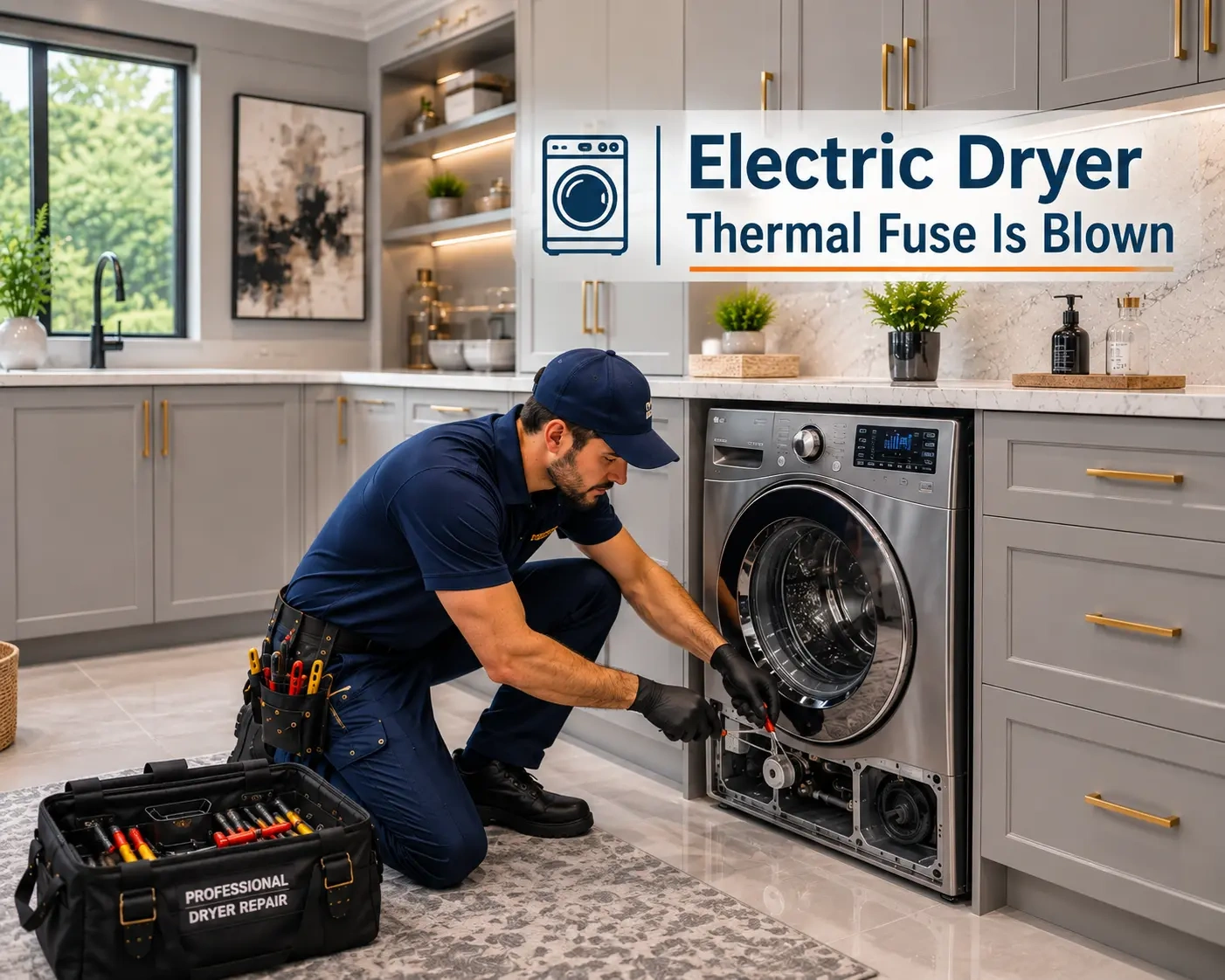
If you lack a multimeter, feel uncomfortable working near 240-volt wiring, or replaced a part only to find the new electric dryer thermal fuse is blown again, professional diagnostics will save time and prevent electrical hazards. Our team provides Same-Day Dryer Repair Des Moines with stocked factory parts for every major brand.
Whether you need LG and Whirlpool Repair Specialists Des Moines for complex laundry systems or fast Washing Machine Repair Near Des Moines when both laundry units act up, our local technicians arrive ready to fix the issue on the first visit. We also cover surrounding communities—if you are searching for home appliance repair near me in West Des Moines, Ankeny, Urbandale, or Waukee, we waive the diagnostic fee when you approve your upfront repair quote.
Conclusion
Confirming whether your electric dryer thermal fuse is blown empowers you to diagnose a cold dryer in under twenty minutes. By unplugging the unit, isolating one wire, and checking for continuity with a multimeter, you can verify if a tripped safety fuse is stopping your heat. Always inspect and clear your exhaust vent before restarting your machine, and reach out to DM Appliance Repair whenever you need fast, warrantied service across the Des Moines metro.